


To remove coffee stains from carpet, blot the spill straight away with a dry white cloth, then rinse it with small amounts of cold water. After that, treat the remaining stain with a quarter teaspoon of dish soap mixed into a cup of cool water. Coffee is hard to shift because it contains natural brown pigments that bind to carpet fibers within seconds and become harder to remove as they dry. Milk and sugar make it worse by leaving behind protein and sticky residue.
When cleaning coffee stains on carpets, speed matters more than any product. A spill you blot in the first few minutes usually disappears completely. This detailed guide by Carpeter explains the exact steps for fresh and dried coffee stains.
What You Need
| Item | Purpose |
|---|---|
| White cotton towels or plain white paper towels | Blot the stain without transferring color. |
| Spoon | Lift coffee grounds and residue. |
| Cold water | Dilute and rinse the coffee stain. |
| Clear dish soap (bleach-free) | Remove coffee residue and oils. |
| Spray bottle (optional) | Apply water evenly without soaking. |
| Fan | Dry the carpet quickly. |
How to Remove a Fresh Coffee Stain
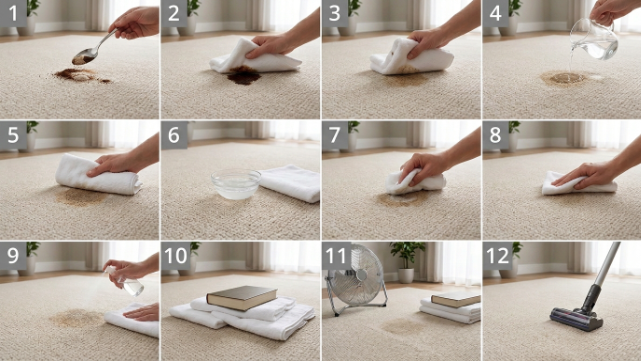
This is the main method. It works on most carpets and removes the stain completely if you start quickly.
1. Scoop Up Anything Solid
Before tackling liquid pigments, clear away physical debris like coffee grounds, foam, or coarse sugar granules. Using a dull spoon edge allows you to lift solid particles without pressing them deeper into the carpet backing. Always scrape toward the center to keep the mess contained.
2. Blot the Liquid
Immediately absorb pooled fluid by placing a thick folded white towel onto the spill and applying firm downward pressure. Avoid rubbing or scrubbing at all costs, as friction pushes the dark coffee dye into carpet fibers and disrupts their natural weave, causing permanent fraying and discoloration.
3. Keep Blotting with Clean Sections
Continuously shift to unused, dry sections of your cloth each time you press down. Reusing a saturated area transfers absorbed coffee back into carpet fibers. Repeat this process patiently until the towel shows almost no brown liquid transfer upon direct firm contact.
4. Add a Little Cold Water
Apply small amounts of cool water to thin out remaining coffee residue trapped within the pile. Always use cold liquid rather than warm, as heat permanently sets dark tannins into carpet fibers. Be extremely careful to mist lightly so you avoid soaking the deeper carpet padding underneath.
5. Blot Again
Alternate between splashing a little cold water and firmly pressing with dry towels a few times. Diluting and blotting iteratively draws stubborn coffee pigments upward from deep within the fibers. For simple black coffee, this straightforward rinse cycle often eliminates fresh marks completely.
6. Mix a Cleaning Solution
When plain water fails to remove the discoloration, prepare a mild soap mixture using clear liquid dish detergent and cool water. Clear detergent prevents accidental dye transfer. This gentle soap mixture effectively breaks down oils from cream or milk without leaving heavy residue behind.
7. Dab It On and Wait
Gently press a soapy damp cloth onto the affected surface, letting the solution penetrate the stain without soaking the carpet backing. Giving it five full minutes allows active surfactants enough time to break chemical bonds between sticky coffee oils and fibers, making overall stain extraction far more effortless.
8. Blot from the Outside In
When cleaning, work inward from the outer perimeter toward the center of the spot. Cleaning outwards spreads fluid into unstained carpet areas, enlarging the mark. Concentrating your movement inward keeps the stain contained and forces trapped moisture directly into your towel.
9. Rinse with Clean Cold Water
Thoroughly remove residual detergent by lightly splashing clean water over the spot and blotting immediately. Leaving soap behind creates a sticky film that rapidly attracts everyday dirt, recreating dark spots later. Keep rinsing until pressing a fresh towel yields zero soapy bubbles or slippery residue.
10. Dry the Area
Extract lingering moisture by layering clean, dry towels over the affected area and weighting them down with a heavy book for an hour. Afterward, position an electric fan to circulate air directly across the damp carpet, ensuring rapid drying to prevent mold growth and deep stain resurfacing.
11. Vacuum
Once the carpet is entirely dry, run a vacuum cleaner over the treated spot. The cleaning process naturally flattens carpet fibers; vacuuming restores their original upright texture, fluffiness, and uniform appearance so the repaired section blends seamlessly back into the surrounding home flooring.
How to Remove a Dried or Old Coffee Stain
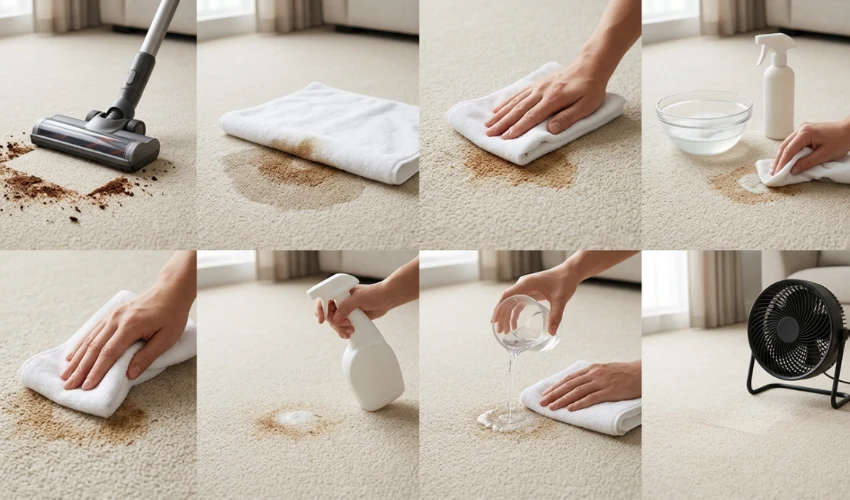
A dried stain has to be made wet again before anything can lift it. Do not jump straight to a strong chemical, because it often damages the carpet more than it removes the mark.
1. Vacuum the Spot First
Start by thoroughly vacuuming the area to eliminate any dried coffee crust and loose debris trapped in the wall-to-wall carpet. If left intact, this hardened surface layer prevents cleaning liquids from penetrating deep into the fibers. Clearing the top layer allows subsequent solutions to reach embedded stains directly.
2. Soften the Stain
Rehydrate dried coffee pigments by dampening the mark with cool water and covering it with a soaked towel for up to twenty minutes. Keeping the towel wet breaks down hardened residue, loosening the chemical bond between tannins and carpet pile so extraction proceeds much more smoothly.
3. Blot Firmly
Press down firmly with a clean cloth onto the rehydrated spot. Softened coffee stains frequently release substantial amounts of trapped brown dye at this stage without soap. Absorbing this loose pigment right away prevents re-contamination when applying liquid cleaners later on.
4. Apply the Dish Soap Solution
Dab a mild clear dish detergent and cool water mixture onto the remaining mark, letting it sit undisturbed for roughly ten minutes. The detergent acts as an active surfactant, penetrating deep into carpet fibers to dissolve embedded coffee oils without damaging backing materials or stripping original yarn colors.
5. Blot Again, Outside In
Apply strong downward pressure using clean sections of your towel, moving inward from the outer borders. Working from the edge keeps loosened liquid from expanding into the surrounding pile. Regularly rotating your towel ensures absorbed coffee pigment isn’t pushed back into carpet fibers.
6. Use an Oxygen Stain Remover if Color Remains
If stubborn discoloration persists, clean the synthetic carpet with a commercial oxygen stain remover, strictly following the product’s timing. Oxygen cleaners oxidize tough coffee tannins. Never apply them to natural wool or silk, as oxidizers alter delicate protein fibers and cause severe permanent surface damage.
7. Rinse Well
Flush out chemical residue by repeatedly applying small amounts of cool water and blotting thoroughly. Old stains require heavy soap application, making persistent rinsing essential. If left in carpet yarns, remaining detergent film attracts airborne dust, causing dark soil rings to reappear later.
8. Dry Quickly with a Fan
Accelerate evaporation by aiming a high-speed fan directly across the damp area immediately after rinsing. Rapid air circulation stops residual coffee water from wicking upward from backing layers. If a faint brown outline forms overnight due to slow drying, light surface re-blotting fixes it easily.
Stains With Milk, Sugar, or Cream
What you added to the cup changes what you have to clean
Coffee With Milk or Cream
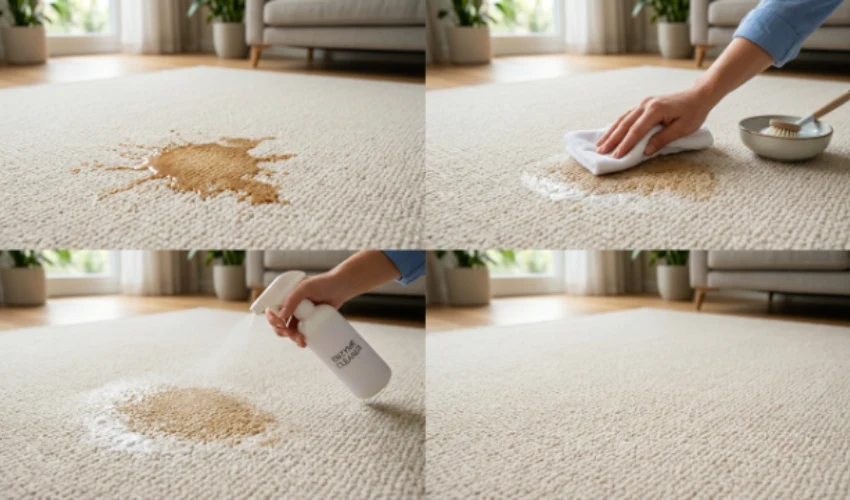
Milk brings protein and fat into the stain. Protein sets hard if it gets warm, which is the main reason heat is off limits. Fat leaves an invisible greasy film that collects dirt, so the spot looks fine for a week and then turns gray. Milk left on the carpet also smells sour after a few days.
Clean it in two rounds. Remove the brown color first with cold water and dish soap. Then apply an enzyme cleaner, sold for pet stains in most shops, and leave it damp for ten to fifteen minutes. Enzymes break down the protein and fat that soap cannot touch.
Coffee With Sugar or Syrup
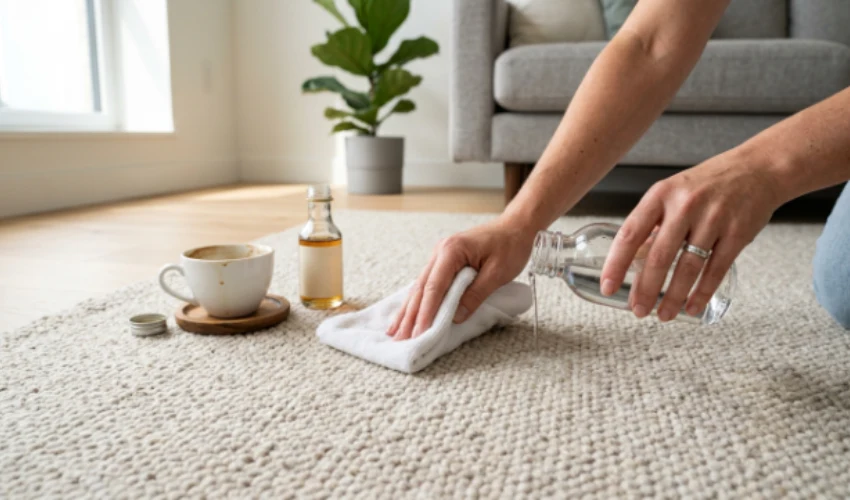
Sugar does not stain, but it dries into a sticky glaze that grabs dirt. A month later you get a dark patch shaped like the original spill. The fix is simple and boring: rinse with clean cool water and blot at least three or four times. Flavored syrups need even more rinsing because they contain oils and thickeners.
Black Coffee
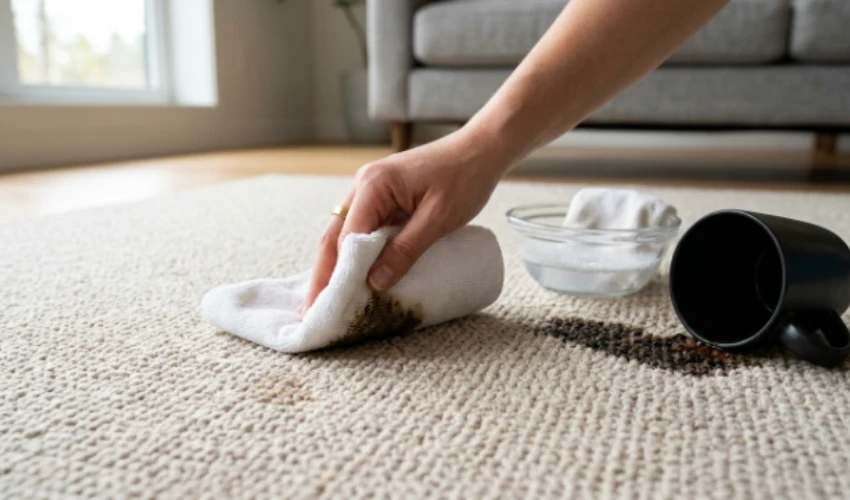
Black coffee is the easiest of the three to remove, even though it looks the worst. There is no milk or fat involved, so water and dish soap usually handle it. Espresso and cold brew are stronger and may need one extra round.
Cleaning by Carpet Type
The carpet you have decides which products are safe. If you do not know what your carpet is made of, check the invoice or the label inside a closet. If you still cannot tell, treat it as wool, because anything safe for wool is safe for everything else.
Wool Carpet
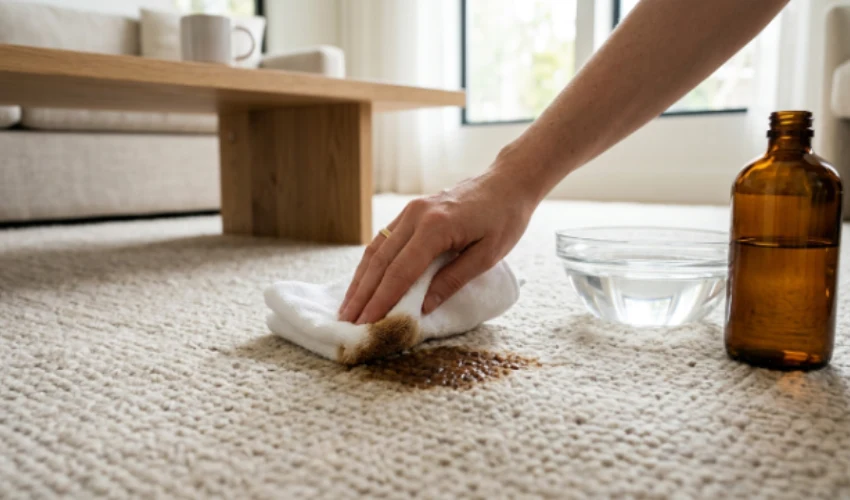
Wool is a natural fiber and behaves a bit like hair. It soaks up coffee fast and reacts badly to strong cleaners. Use cool water and a spotter labeled safe for wool, ideally one carrying a WoolSafe approval. Blot only, because scrubbing makes wool fuzzy for good. Keep it as dry as you can and dry it quickly.
Never use oxygen-based stain removers, bleach, ammonia, or vinegar on wool carpet. For an old stain on a good wool carpet, call a professional instead of experimenting.
Nylon Carpet
Nylon is the most common carpet in homes and the easiest to clean. Dish soap, oxygen cleaners, enzyme cleaners, and 3 percent hydrogen peroxide are all fine after a hidden area test. Avoid very strong alkaline cleaners such as laundry powder, because they strip the stain protection applied at the factory. Reapply a carpet protector after any deep clean.
Polyester Carpet
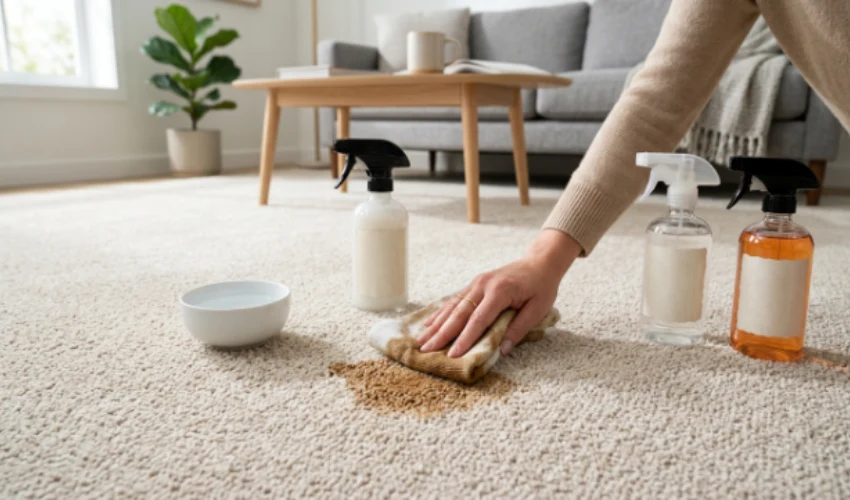
Polyester shrugs off watery stains, so coffee color usually lifts easily. Its weakness is oil, which it pulls deep into the fiber. That means a plain black coffee is simple, but a latte needs an enzyme cleaner or a citrus degreaser afterward. Rinse well and avoid heavy scrubbing, since polyester crushes more easily than nylon.
Olefin or Polypropylene Carpet
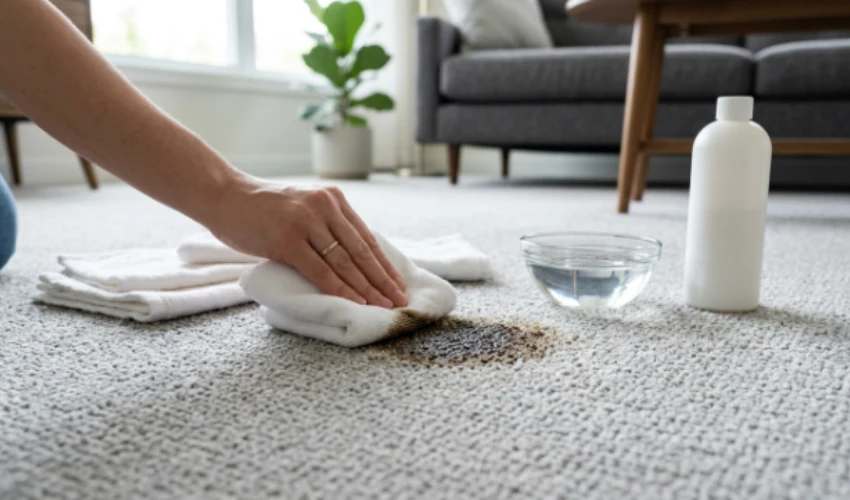
Olefin has its color built into the fiber, so stains struggle to grip and strong cleaners will not fade it. Two things to watch. It hates heat, so keep steam cleaners and hot water away from it. And it is known for stains creeping back up from the backing as it dries, so remove as much moisture as you can.
White or Light Colored Carpet
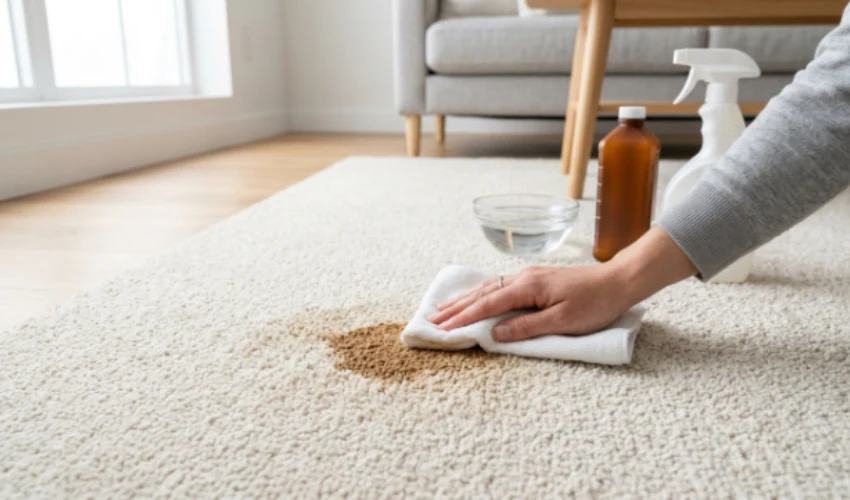
Light or white carpet shows the stain and every mistake, but it also gives you the most freedom. Oxygen cleaners and 3 percent hydrogen peroxide are safe on white synthetic carpet. Rinse more than feels necessary, because leftover soap shows up as a gray halo on pale carpet. Clean slightly past the edge of the stain so you do not leave a suspiciously bright patch. None of this applies to white wool, which still needs wool-safe products only.
| Carpet Type | Safe to Use | Never Use |
|---|---|---|
| Wool | Cool water, mild dish soap, wool-safe spotters | Oxygen cleaners, bleach, ammonia, vinegar, hot water |
| Nylon | Dish soap, oxygen cleaners, enzymes, 3% peroxide | Laundry powder, strong degreasers |
| Polyester | Dish soap, oxygen cleaners, citrus degreaser for oils | Heavy scrubbing, strong alkaline cleaners |
| Olefin | Most spotters, oxygen cleaners, degreasers | Steam, hot water, dragging or rubbing hard |
| Silk or Viscose | Nothing. Call a professional. | Any home treatment |
Which Cleaner Should You Use?
This table covers everything commonly recommended for coffee stains, including the ones that do not really work.
| Cleaner | Best For | Watch Out For |
|---|---|---|
| Cold Water | Every fresh spill, as the first step | Soaking the carpet and pushing coffee into the backing |
| Dish Soap Solution | The main home treatment on any carpet | Leftover soap turns sticky and attracts dirt, so rinse well |
| White Vinegar | Odor and rinsing away residue after cleaning | Damages wool and silk, and the smell lingers for days |
| Baking Soda | Absorbs odor on a dry, already cleaned area | It does not remove the stain itself and is hard to vacuum out |
| Hydrogen Peroxide (3%) | A stubborn brown shadow on light synthetic carpet | It is a bleach. Test first; never use on wool or dark carpet |
| Oxygen Stain Remover | Dried coffee stains on synthetic carpet | Not safe on wool or silk |
| Enzyme Cleaner | Coffee with milk or cream, and any sour smell | Needs 10–15 minutes damp to work |
| Carpet Spot Cleaner | Anything water and soap will not finish | Check the label matches your carpet type |
| Portable Spot Machine | Large spills and repeat stains | Easy to overwet if you spray without extracting |
| Professional Cleaning | Old stains, wool, and spills that reached the pad | Choose a certified technician |
Look for a product carrying the Carpet and Rug Institute Seal of Approval. Many carpet warranties require an approved product, and using something else can affect a future claim.
Mistakes That Make Coffee Stains Permanent
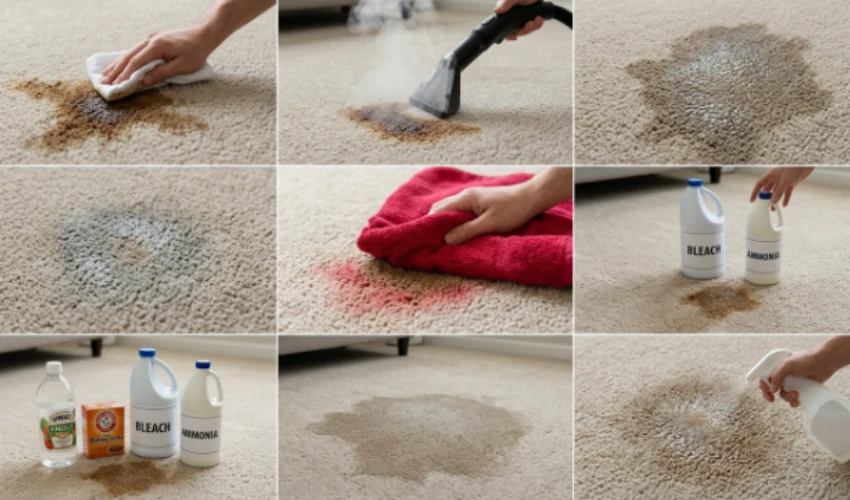
Below are some top mistakes that make the coffee stains permanent on the carpet.
- Rubbing or scrubbing. It spreads the stain, pushes it into the padding, and leaves the carpet pile fuzzy for good.
- Using hot water or a steam cleaner first. Heat sets both the coffee color and any milk in the drink.
- Soaking the area. Too much water carries coffee down into the backing, where you cannot reach it.
- Skipping the rinse. Leftover soap is sticky and pulls in dirt, so the spot looks worse a month later.
- Using a colored cloth, which can transfer dye into wet carpet.
- Reaching for bleach or ammonia. Both damage carpet fibers and dyes permanently.
- Mixing products together. Vinegar and baking soda cancel each other out, and bleach with ammonia gives off a dangerous gas.
- Letting the carpet dry slowly, which is the main reason stains come back.
- Adding more chemicals when the stain reappears, which makes the underlying problem worse.
Things You Should Never Put on Carpet
| Product | Why People Try It | What Actually Happens |
|---|---|---|
| Bleach | It removes stain color | It removes carpet color permanently and weakens fibers |
| Ammonia | It is a strong cleaner | Damages wool and strips stain protection from nylon |
| Laundry Detergent | It is made for stains | Too strong for carpet and can leave a pale patch |
| Dishwasher Powder | It is powerful | Far too harsh and abrasive for carpet fiber |
| Lemon Juice | It bleaches naturally | Can lighten natural fibers and leaves sticky residue |
| Toothpaste | A popular online tip | Contains grit that works into the pile and will not rinse out |
Why the Stain Came Back, and How to Stop It
If a faint brown ring appears the morning after you cleaned, the coffee did not come back. It came up. Some of it was sitting in the carpet backing, and as the damp carpet dried, the moisture carried it to the surface. Cleaners call this wicking.
The fix is not more chemicals. Dampen the ring lightly with clean water, blot it hard under a weighted towel, and dry the area fast with a fan. Repeat if you need to. Carpet should be dry within about twelve hours, which is the benchmark used by the Carpet and Rug Institute.
| Drying Method | Time It Takes | How to Speed It Up |
|---|---|---|
| Blotting and Weighted Towels | One to Three Hours | Change the towels twice |
| Blotting Plus a Fan | One to Two Hours | Aim the fan across the carpet, not directly down at it |
| Portable Spot Machine | Four to Eight Hours | Make extra passes with the spray trigger turned off |
| Home or Rented Carpet Cleaner | Six to Twelve Hours | Use less cleaning solution and open the windows |
| Professional Cleaning | Six to Twelve Hours | Ask for air movers and keep the room well ventilated |
How to Get Rid of the Coffee Smell
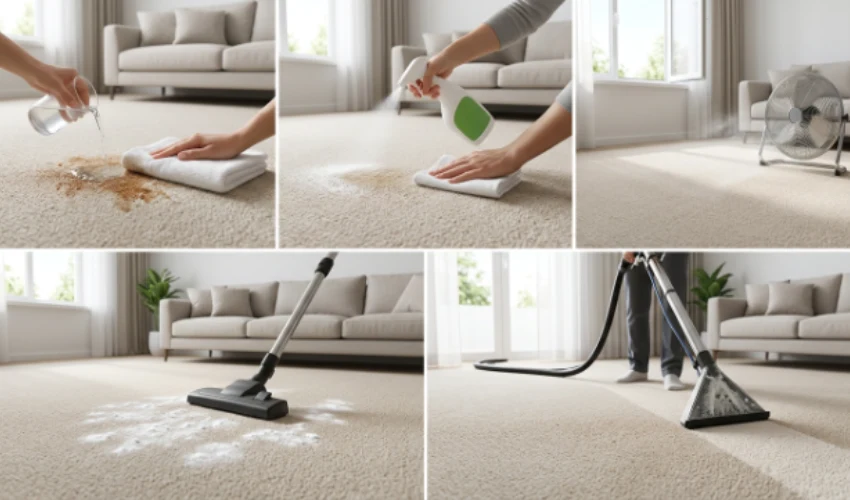
Black coffee rarely leaves a smell. Milk almost always can, because the residue turns sour in a damp carpet.
- Rinse the spot again. Cool water and firm blotting remove the residue that air fresheners only cover up.
- Use an enzyme cleaner. Keep the area damp for the full time on the label so the enzymes can break down the milk.
- Dry it quickly. Use a fan and open a window. Most smell problems are really moisture problems.
- Deodorize last. Once the carpet is completely dry, sprinkle a little baking soda, leave it for fifteen minutes, and vacuum thoroughly.
- Check underneath. If the smell will not go away, the coffee has reached the padding. That needs a professional.
When to Call a Professional
You can handle most coffee spills yourself. Call someone in when:
- The carpet is wool, silk, or an antique rug
- The stain has dried and survived two full rounds of cleaning
- You spilled a full mug or more, so it likely reached the padding
- The stain keeps reappearing after every clean
- There is still a smell after the mark is gone
- Your carpet warranty requires professional cleaning
Look for a technician certified by the Institute of Inspection, Cleaning and Restoration Certification. Ask whether they will treat a single spot rather than the whole room, and keep the receipt, since many warranties ask for proof of regular professional cleaning.
How to Prevent Coffee Stains
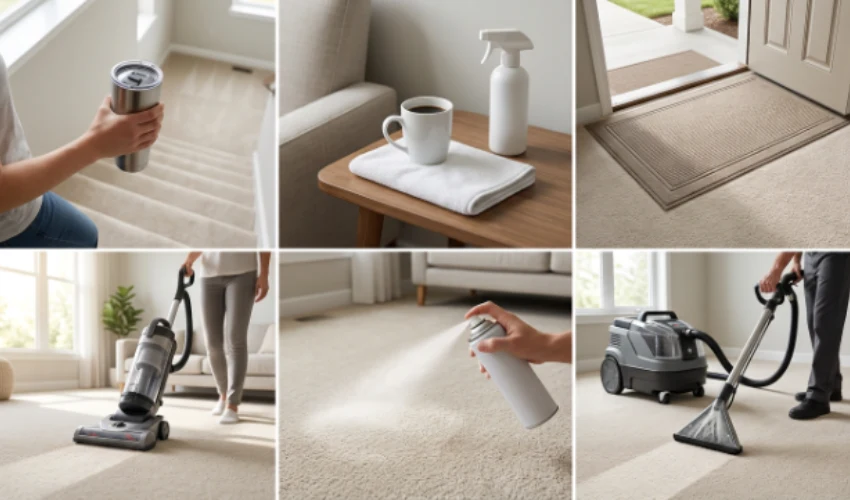
Check the precautionary measures below to prevent coffee stains on carpet.
- Use a lidded mug on carpeted floors, especially on stairs.
- Keep a couple of white towels and a spotter where you actually drink coffee, not in a cupboard upstairs.
- Put mats at the doors. Less dirt in the carpet means any spill is easier to clean.
- Vacuum once or twice a week. The Carpet and Rug Institute calls regular vacuuming the single most effective thing you can do for a carpet.
- Reapply a carpet protector after any deep clean, because the factory treatment wears off over time.
- Book a professional deep clean every twelve to eighteen months, which is the interval most manufacturers recommend and many warranties require.
Final Thoughts
Successfully removing coffee stains relies on quick action, proper techniques, and gentle care. Always blot immediately from outer edges inward using a clean, dry white towel. Use cool water only, as heat permanently bakes tannin stains into fibers. A simple solution of dish soap and cool water tackles most fresh spills, provided you rinse away all suds completely. If milk or cream was involved, follow up with an enzyme cleaner. Always check carpet compatibility because delicate wool requires specialized products. Finally, dry the spot rapidly to prevent stain wicking, and call a professional for large, persistent, or valuable carpet spills.
Frequently Asked Questions
Do coffee stains come out of carpet permanently?
Most do. A fresh spill blotted within minutes usually leaves nothing behind. Dried stains normally clear after a few rounds with an oxygen cleaner. The ones that resist are usually old marks on wool, or spills that soaked into the padding.
Does hot water set coffee stains?
Yes. Heat makes the brown pigment permanent and sets any milk in the drink. Use cold or lukewarm water. Professionals use hot water only because their machines suck the liquid straight back out.
Does baking soda remove coffee stains?
Not really. It absorbs moisture and smell, but it does not lift the color out of the fiber. Use it as a deodorizer on a dry, already cleaned spot.
Can vinegar damage carpet?
It can damage wool and silk. On synthetic carpet, diluted vinegar is safe, but it works better for smell and residue after cleaning than as a stain remover. The vinegar smell also takes days to fade.
Can I use hydrogen peroxide on carpet?
On light colored synthetic carpet, yes, at 3 percent strength. Test a hidden area and wait ten minutes before judging, because it bleaches slowly. Never use it on wool or dark carpet.
Can steam cleaning remove coffee stains?
Professional hot water extraction works very well. A handheld steam appliance is different and can set an untreated stain, because it adds heat without removing the liquid. Clean the stain first, then extract.
How long should a cleaning solution sit on the stain?
About five minutes for dish soap, five to ten for an oxygen cleaner, and ten to fifteen for an enzyme cleaner. Never let a solution dry on the carpet.
Can I use a hair dryer to dry the carpet faster?
No. The heat can set any remaining color and can even melt polyester or olefin fibers. Use a fan at room temperature.
Does club soda work?
About as well as plain cold water. The bubbles add nothing. Avoid anything with sugar in it, such as tonic water.
Is coffee harder to remove than tea or red wine?
They are all similar. Coffee with milk is the hardest of the group, because you are cleaning color, protein, and fat at the same time. Black coffee is about the same as tea.
